
Basil is a popular herb in kitchens around the world, loved for its fragrant leaves and versatility in cooking. However, basil plants are not immune to issues that can affect their health and appearance. One common problem that basil growers face is the appearance of white and brown spots on their basil leaves. This can be distressing for plant owners, but understanding the root causes and how to prevent it can help you maintain a healthy, thriving basil plant.
What Causes White and Brown Spots on Basil Leaves?
Fungal Infections: One of the most common reasons for white or brown spots on basil leaves is a fungal infection. Fungal diseases such as Downy Mildew or Powdery Mildew are often the culprits. These fungi thrive in humid conditions and can cause irregular patches, typically starting as small, white spots that turn brown or gray as the disease progresses.
Bacterial Infections: Another possibility is bacterial infections, which can cause water-soaked lesions or brown spots on the leaves. Bacterial leaf spots often start as small, brownish lesions with a yellow halo, and these can spread if not controlled.
Environmental Stress: Environmental factors such as improper watering, excessive humidity, or lack of airflow can cause stress to basil plants, leading to the appearance of spots. Overwatering, in particular, can lead to fungal growth and root rot, which affects the leaves.
Pests: Aphids, whiteflies, and other pests can also cause damage to basil plants. These insects suck sap from the leaves, causing yellowing or browning, and may leave behind a sticky residue that attracts mold growth.
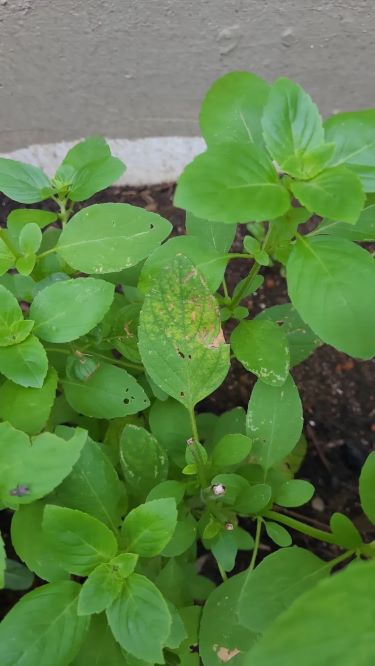
How to Prevent and Treat White and Brown Spots on Basil Leaves
Proper Watering: Ensure you are watering your basil plant properly. Avoid overwatering, and always allow the soil to dry out between waterings. This will help prevent fungal infections and root rot. Consider using a self-watering system like the Adjustable Basket Microgreen Planting Kit, which ensures your plants receive the right amount of water and reduces the risk of overwatering.
Improve Air Circulation: Basil plants need good airflow to thrive. Avoid overcrowding your plants, and if growing indoors, consider using grow lights to ensure your plants receive adequate light and ventilation. EDKFARM’s plant growth lights are ideal for creating an optimal environment for your herbs.
Use Fungicides or Natural Remedies: If you notice signs of fungal or bacterial infections, consider using an organic fungicide or a natural remedy like neem oil. Applying these treatments regularly can help control the spread of disease.
Pest Control: Regularly check your basil plants for pests and remove them manually or with insecticidal soap. Maintaining healthy plants will help resist pest attacks and diseases.
Conclusion:
Seeing white and brown spots on your basil leaves doesn’t have to be a death sentence for your plant. By understanding the underlying causes—whether it’s fungal infections, environmental stress, or pests—you can take action to correct the issue and restore your basil plant to health. Whether you’re growing basil indoors with the help of a grow light or using our Adjustable Basket Microgreen Planting Kit to optimize watering, EDKFARM is here to support you on your gardening journey.


